...

Taha Corp

History

TAHA was established in 2003 with a vision to eliminate waste from the aluminium industry. Through its zero waste, ultra-low carbon dross processing technology, TAHA is making an important contribution towards making the aluminium industry more sustainable.

TAHA’s environmentally friendly aluminium dross processing solutions recover metal and refine the residuals, without using salt or any other chemicals, turning the residuals into feedstocks for a number of in house developed value-added applications.

2003

Establishment of TAHA 

The founding year of TAHA marked the beginning of unwavering dedication to delivering superior metal recovery solutions.

2005

Entry into Downstream Aluminium Operations

TAHA embarked on a transformative journey, beginning dross processing for GARMCO, one of the MENA region's largest downstream aluminium operations. This milestone solidified TAHA's significant presence and influence in the industry.

2010

Expansion into metal recovery for Wire and Rod production facility

TAHA expanded its horizons by providing metal recovery services to Midal Cables, the leading company in supplying the world market with Rod casts and further production of wires, consolidating its position as a trusted partner in the global metal recovery landscape.

2011

Rio Tinto and TAHA Partner for Sustainable Aluminium Processing

Rio Tinto and TAHA International are working together to implement zero-waste solutions for aluminium dross, enhancing metal recovery and supporting sustainability in New Zealand.

2014

Services for Alba

TAHA extended its expertise to provide metal recovery services to the world’s largest smelter outside China, underscoring its global footprint and unwavering dedication to excellence in the industry.

2017

Technology Licensing Agreement

TAHA engaged in a Technology Licensing Agreement (TLA), through which its patented processing technology was licensed to Runaya Refining for utilization across Indian cast-houses, emphasizing its commitment to fostering technological advancements and collaborative growth.


Find Out More

WATCH OUR VIDEO

Our Mission

To flourish as a dross processor that identifies, designs, develops and commercializes viable processes and products intended to improve environmental quality, increase metal return, and resolve serious industry legacy issues. To develop our processes and value-adding products in a considered, cost-efficient manner. To pursue commercialization or development partners when and where appropriate. To make a difference.

Our Vision

To be recognized as the new benchmark in dross processing. To be seen by our customers globally as highly competent, reliable and competitive problem solvers. To focus on sustainability in everything we do, understanding the impact of what we do on people and the planet, as well as profit. To keep health, safety and the environment as our focal point.

TAHA’s Values

Accountability

Taking responsibility for our actions and their impact on people, communities, and clients.

Business Partnerships

Collaborating with partners who share our values.

Collaboration

Fostering teamwork within and beyond TAHA to deliver and receive the best.

Community

Contributing to society by developing our people and those we work with.

Quality

Striving for excellence in all that we do.

Safety

Ensuring the safety of everyone we work with, aiming for zero incidents and accidents.

Service Excellence

Delivering outstanding service to achieve excellence.

Achievements

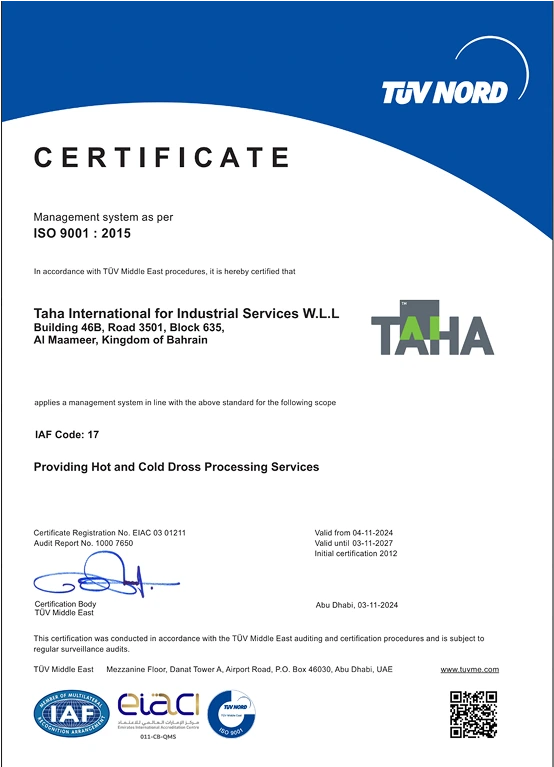
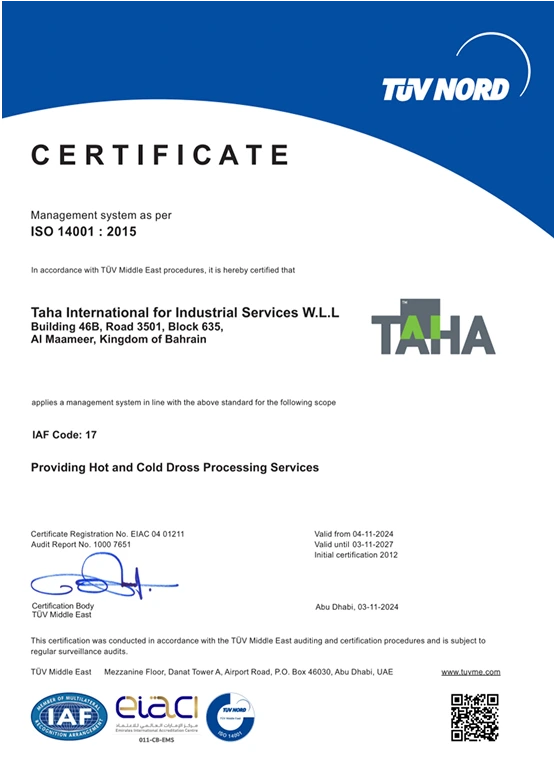
TAHA International for Industrial Services has obtained the ISO 19001:14001:45001 certification

ISO 19001

View certifiacte

ISO 14001

View certifiacte
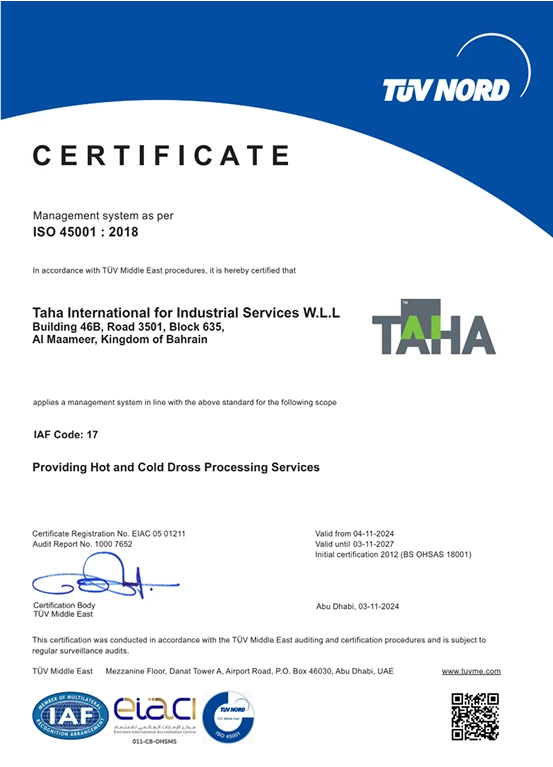
ISO 45001

View certifiacte
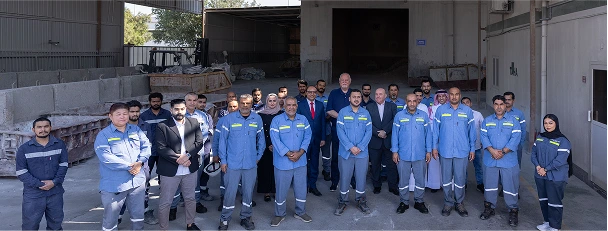
Meet the Team

A passionate group of innovators driving sustainability, innovation, and excellence to shape a greener future for the aluminium industry.

Corporate
Governance Policies

Risk Management Policy

Our Risk Management Policy provides a structured approach to identifying, assessing, managing, and mitigating risks that may impact the organization’s ability to achieve its objectives. The policy ensures that risk management is an integral part of decision-making and business operations.

View Details

Board Charter

The Board of Directors of TAHA International Corporation is committed to providing strategic leadership, ensuring sound governance, and overseeing the company’s operations in alignment with its mission, vision, and values.

View Details

Code of Conduct

At TAHA International Corporation, we are committed to conducting our business with integrity, responsibility, and respect. This Code of Conduct outlines the principles and standards that guide our behaviour and decision-making. 

View Details

Shareholder
Communication Policy

This policy outlines the principles and practices for transparent, consistent, and timely communication with shareholders to foster trust, ensure accountability, and enhance shareholder engagement. This policy reflects the company’s dedication to fostering strong, trust-based relationships with its shareholders. 

View Details

Risk Management Policy

1. Purpose

This Risk Management Policy provides a structured approach to identifying, assessing, managing, and mitigating risks that may impact the organization’s ability to achieve its objectives. The policy ensures that risk management is an integral part of decision-making and business operations.

2. Scope

This policy applies to all employees, departments, and stakeholders of the organization. It encompasses all types of risks, including but not limited to financial, operational, strategic, environmental, and reputational risks.

3. Objectives

  • Identify and assess potential risks that could affect the organization’s operations and objectives.
  • Develop effective mitigation strategies to minimize the impact of risks.
  • Promote a culture of risk awareness and proactive management.
  • Ensure compliance with legal, regulatory, and industry standards.
  • Protect the organization’s assets, reputation, and stakeholders.

4. Risk Management Principles

  • Integration: Risk management is embedded into all business processes and decision-making activities.
  • Proactiveness: Risks are anticipated, and actions are taken to prevent or minimize their impact.
  • Transparency: Risk information is communicated openly and clearly across the organization.
  • Accountability: Risk management responsibilities are clearly assigned to appropriate individuals or teams.
  • Continuous Improvement: Risk management practices are regularly reviewed and improved.

5. Risk Management Process

Risk Identification

  • Identify risks across all areas of the organization, including internal and external factors.
  • Use tools such as risk assessments, audits, and stakeholder consultations.

Risk Assessment

  • Evaluate risks based on their likelihood and potential impact.
  • Prioritize risks to focus resources on the most critical areas.

Risk Mitigation

  • Develop and implement strategies to mitigate or manage identified risks.
  • Options may include avoiding, transferring, reducing, or accepting risks.

Risk Monitoring and Reporting

  • Continuously monitor risks and the effectiveness of mitigation measures.
  • Report risks and management efforts to relevant stakeholders.

Review and Feedback

  • Regularly review the risk management framework to adapt to changes in the business environment.
  • Incorporate lessons learned into future risk management practices.

6. Roles and Responsibilities

  • Board of Directors: Oversee the organization’s risk management framework and ensure alignment with strategic objectives.
  • Management Team: Implement the risk management policy and integrate it into business operations.
  • Risk Owners: Identify and manage risks within their areas of responsibility.
  • Employees: Report potential risks and adhere to risk management procedures.

7. Training and Awareness

The organization will provide regular training and resources to ensure all employees understand the importance of risk management and their roles in the process.

8. Compliance and Monitoring

The organization is committed to complying with all applicable legal, regulatory, and industry standards. Risk management activities will be monitored and audited to ensure effectiveness and compliance.

9. Policy Review

This policy will be reviewed annually or whenever significant changes occur in the organization or its environment to ensure its relevance and effectiveness.

This will close in 0 seconds

Board Charter for TAHA International Corporation

1. Purpose

The Board of Directors of TAHA International Corporation is committed to providing strategic leadership, ensuring sound governance, and overseeing the company’s operations in alignment with its mission, vision, and values.

2. Roles and Responsibilities

The Board’s primary responsibilities include:

  • Strategic Oversight: Approve and monitor the implementation of the company’s strategy and objectives.
  • Governance and Compliance: Ensure adherence to legal, regulatory, and ethical standards.
  • Risk Management: Oversee the identification and management of risks to safeguard the company’s assets and reputation.
  • Financial Stewardship: Approve budgets, financial plans, and ensure the integrity of financial reporting.
  • Leadership Appointments: Appoint and evaluate the CEO and senior management.
  • Sustainability Commitment: Promote environmental stewardship, social responsibility, and governance excellence in all operations.

3. Composition of the Board

The Board shall consist of individuals with diverse skills, experience, and perspectives, ensuring effective governance and decision-making. The composition will be reviewed periodically to align with organizational needs.

4. Meetings

  • The Board will meet at least quarterly or more frequently as required.
  • Meetings will follow a structured agenda, ensuring all critical matters are discussed effectively.

5. Decision-Making

  • Decisions will be made by consensus or majority vote when necessary.
  • The Board will act in the best interest of the company, its stakeholders, and the environment.

6. Committees

The Board may establish committees to focus on specific areas such as audit, risk, sustainability, or remuneration. Each committee will operate under a defined charter.

7. Evaluation and Review

The Board will conduct an annual self-assessment to evaluate its performance and review this charter periodically to ensure alignment with the company’s evolving goals.

This will close in 0 seconds

Code of Conduct for TAHA International Corporation

At TAHA International Corporation, we are committed to conducting our business with integrity, responsibility, and respect. This Code of Conduct outlines the principles and standards that guide our behaviour and decision-making.

1. Integrity and Ethics

  • Act honestly, ethically, and transparently in all business dealings.
  • Avoid conflicts of interest and disclose any potential issues promptly.
  • Comply with all applicable laws, regulations, and company policies.

2. Respect for People

  • Foster a workplace culture of respect, inclusion, and diversity.
  • Treat colleagues, customers, partners, and stakeholders with fairness and dignity.
  • Promote a safe and healthy work environment for all.

3. Environmental Stewardship

  • Uphold our commitment to sustainability and the principles of “Zero Waste, All Potential.”
  • Minimize our environmental footprint by adopting innovative and eco-friendly practices.
  • Support initiatives that promote resource efficiency and circular economy principles.

4. Accountability

  • Take responsibility for our actions and decisions.
  • Maintain transparency and accuracy in financial reporting and communication.
  • Protect the company’s assets, intellectual property, and confidential information.

5. Commitment to Excellence

  • Deliver high-quality services and solutions to our customers.
  • Continuously innovate and improve our processes to stay industry leaders.
  • Collaborate effectively to achieve shared goals and drive growth.

6. Reporting Concerns

  • Report any unethical behaviour, violations of the law, or breaches of this Code of Conduct.
  • Utilize established reporting channels, ensuring confidentiality and protection from retaliation.

Adherence to this Code

All employees, contractors, and stakeholders are expected to uphold this Code of Conduct in their daily work. Non-compliance will be addressed promptly and appropriately.

This will close in 0 seconds

Shareholder Communication Policy

Objective:

This policy outlines the principles and practices for transparent, consistent, and timely communication with shareholders to foster trust, ensure accountability, and enhance shareholder engagement. This policy reflects the company’s dedication to fostering strong, trust-based relationships with its shareholders.

1. Commitment to Transparent Communication

The company is committed to providing shareholders with accurate, clear, and timely information regarding financial performance, strategic initiatives, governance practices, and any other material developments.

2. Communication Channels

The company will use multiple communication channels to engage with shareholders, including but not limited to:

  • Annual General Meetings (AGMs): Formal updates on company performance and strategic direction.
  • Financial Reports: Quarterly and annual reports, made available on the company website.
  • Press Releases: Timely updates on material events.
  • Website: Timely updates on reports, presentations, and FAQs.
  • Direct Communication: Email, phone, or written correspondence for specific inquiries.

3. Accessibility and Responsiveness

The company will ensure that shareholders have access to relevant information and opportunities to ask questions or seek clarifications.

4. Equal Treatment of Shareholders

The company is committed to treating all shareholders equitably, regardless of shareholding size, by ensuring simultaneous dissemination of material information and avoiding selective disclosure.

5. Confidentiality and Legal Compliance

The company will ensure that all communication complies with applicable laws and regulations, including confidentiality obligations, insider trading laws, and corporate disclosure requirements.

6. Feedback and Engagement

Shareholder feedback is valued and will be incorporated into the company’s decision-making processes where appropriate. Shareholders are encouraged to actively participate in meetings and engage with the company through established channels.

7. Review and Updates

This policy will be reviewed periodically to ensure alignment with best practices, regulatory requirements, and the evolving needs of shareholders.

Contact Information:

For inquiries or further information, shareholders may contact the company at info@tahacorp.com

This will close in 0 seconds

This will close in 0 seconds

风险管理政策

1. 目的

风险管理政策构建了一套系统化方法,用于识别、评估、管控及降低可能影响企业实现其目标的各类风险。该政策确保风险管理融入决策制定与业务运营的全流程。

2. 范围

本政策适用于本企业所有员工、部门及利益相关方。其涵盖各类风险,包括但不限于财务、运营、战略、环境及声誉风险。

3. 目标

  • 识别并评估可能影响企业运营和目标实现的潜在风险。
  • 制定有效的缓解策略,以最大限度降低风险影响。
  • 培育风险意识和积极主动的管理文化。
  • 确保遵守法律、法规及行业标准。
  • 保护企业的资产、声誉及利益相关方。

4. 风险管理原则

  • 一体化风险管理贯穿于所有业务流程与决策活动。
  • 前瞻预判风险,并采取行动预防或减轻其影响。
  • 透明在整个企业范围内公开、清晰地传递风险信息。
  • 责任制将风险管理职责清晰分配给相应的个人或团队。
  • 持续改进:定期审查并优化风险管理实践。

5. 风险管理流程

风险识别

  • 识别企业所有领域内外部的风险因素。
  • 运用风险评估、审计及利益相关方沟通等工具。

风险评估

  • 基于风险发生的可能性和潜在影响进行风险评估。
  • 对风险进行优先级排序,优先聚焦于最关键领域。

风险应对

  • 制定并实施策略以缓解或管控已识别的风险。
  • 制定并实施策略以缓解或管控已识别的风险。

风险监控与报告

  • 持续监控风险及缓解措施的有效性。
  • 向利益相关方通报风险及管理工作的进展。

评审与反馈

  • 定期审核风险管理体系,以适应商业环境的变化。
  • 将经验教训融入后续的风险管理实践中。

6. 职责与分工

  • 董事会:监督企业的风险管理框架,确保其与战略目标保持一致。
  • 管理团队:执行风险管理政策,并将其融入业务运营。
  • 风险责任人:在各自职责范围内识别并管理风险。
  • 全体员工:报告潜在风险,并遵守风险管理流程。

7. 培训与意识培养

本企业将定期开展培训并提供相关资源,确保所有员工理解风险管理的重要性及自身在风险管理过程中的职责。

8. 合规与监督

本企业承诺遵守所有适用的法律、法规及行业标准。将对风险管理活动进行监督和审计,以确保其有效性与合规性。

9. 政策评审

本政策将每年评审一次,或在企业或其环境发生重大变化时进行评审,以确保适用性和有效性。

This will close in 0 seconds

TAHA International Corporation 董事会章程

1. 目的

TAHA International Corporation 董事会致力于提供战略领导,确保健全治理,并监督公司运营,使其与公司的使命、愿景和价值观保持一致。

2. 角色与职责

董事会的主要职责包括:

  • 战略监督:审批和监督公司战略及目标的实施。
  • 治理与合规:确保遵守法律、法规及道德标准。
  • 风险管理:监督风险的识别及管理,以保护公司资产和声誉。
  • 财务监管:审批预算和财务计划,确保财务报告的完整性和真实性。
  • 管理层任命:任命并评估首席执行官及高级管理人员。
  • 可持续发展承诺:在所有运营环节中倡导环境管理、社会责任及卓越治理。

3. 董事会构成

董事会应由拥有多样技能、丰富经验和多元视角的人员组成,确保有效治理和合理决策。董事会构成将定期审查,确保符合企业发展需求。

4. 会议

  • 董事会每季度至少召开一次会议,或根据需要提高会议频率。
  • 会议将遵循规范议程,确保所有关键事项得到有效讨论。

5. 决策

  • 董事会将通过协商一致或在必要时以多数票表决的方式作出决策。
  • 董事会将以公司、利益相关方及环境的最佳利益为出发点行事。

6. 委员会

董事会可针对特定领域设立相应的委员会,如审计、风险、可持续发展或薪酬委员会。各委员会将按照明确章程运作。

7. 评估与审查

董事会将每年进行一次自我评估,以评价其绩效,并定期审查本章程,确保其与公司不断发展的目标保持一致。

This will close in 0 seconds

TAHA International Corporation 行为准则

TAHA International Corporation 致力于以诚信、负责和尊重的态度开展业务。本行为准则概述了指导我们行为和决策的原则和标准。

1. 诚信与道德

  • 在所有商业往来中秉持诚实、道德与透明的原则。
  • 避免利益冲突,并及时披露任何潜在问题。
  • 遵守所有适用的法律、法规及公司政策。

2. 尊重他人

  • 营造尊重、包容和多元的职场文化。
  • 公平对待和尊重同事、客户、合作伙伴及利益相关方。
  • 为所有员工营造安全健康的工作环境。

3. 环境管理

  • 坚守我们对可持续发展的承诺,秉持“零废弃,尽其用”的原则。
  • 通过创新和环保实践,尽量减少对环境的影响。
  • 支持促进资源效率和循环经济原则的举措。

4. 担当负责

  • 对自己的行为和决策承担责任。
  • 在财务报告和沟通中保持透明度和准确性。
  • 保护公司资产、知识产权及机密信息。

5. 追求卓越

  • 为客户提供高质量的服务和解决方案。
  • 持续创新和优化我们的流程,力求保持行业领先地位。
  • 开展有效协作,实现共同目标并推动企业发展。

6. 举报问题

  • 举报任何不道德行为、违法违规或违反本行为准则的情况。
  • 利用正规渠道举报,确保保密性并免受报复。

遵守行为准则

所有员工、承包商及利益相关方均应在日常工作中遵守本行为准则。任何违反行为都将及时得到妥善处理。

This will close in 0 seconds

股东沟通政策

目标:

本政策概述了与股东进行透明、一致、及时沟通的原则和做法,以促进信任、落实责任划分并增进股东参与度。本政策体现了公司致力于与股东建立牢固、基于信任的关系。

1. 透明沟通承诺

公司承诺就财务业绩、战略举措、治理实践及任何其他重大进展,及时向股东提供准确、清晰的信息。

2. 沟通渠道

公司将通过多种沟通渠道与股东互动,包括但不限于:

  • 年度股东大会 (AGM):正式汇报公司业绩和战略方向的最新情况。
  • 财务报告:在公司网站上提供季度和年度报告。
  • 新闻公告:及时更新重大事件信息。
  • 公司网站:及时更新报告和简报,并提供常见问题解答。
  • 直接沟通:通过电子邮件、电话或书面信函解答具体问题。

3. 可获取性与响应性

公司将确保股东能够获取相关信息,并有提出问题或寻求澄清的渠道。

4. 平等对待股东

公司承诺公平对待所有股东。无论股东持股多少,公司确保同时向其披露重大信息,避免选择性披露。

5. 保密性与合规性

公司将确保所有沟通符合适用法律和法规,包括保密义务、内幕交易法及公司信息披露要求。

6. 反馈与参与

公司高度重视股东反馈,并将在适当时将其纳入决策过程。我们鼓励股东通过既定渠道积极参与会议并与公司沟通。

7. 审查与更新

本政策将定期审查,以确保其符合最佳实践、监管要求及股东不断变化的需求。

联系信息:

如有疑问或需要了解更多信息,股东可发送电子邮件联系公司:  info@tahacorp.com

This will close in 0 seconds

Scroll to Top
Seraphinite AcceleratorOptimized by Seraphinite Accelerator
Turns on site high speed to be attractive for people and search engines.